


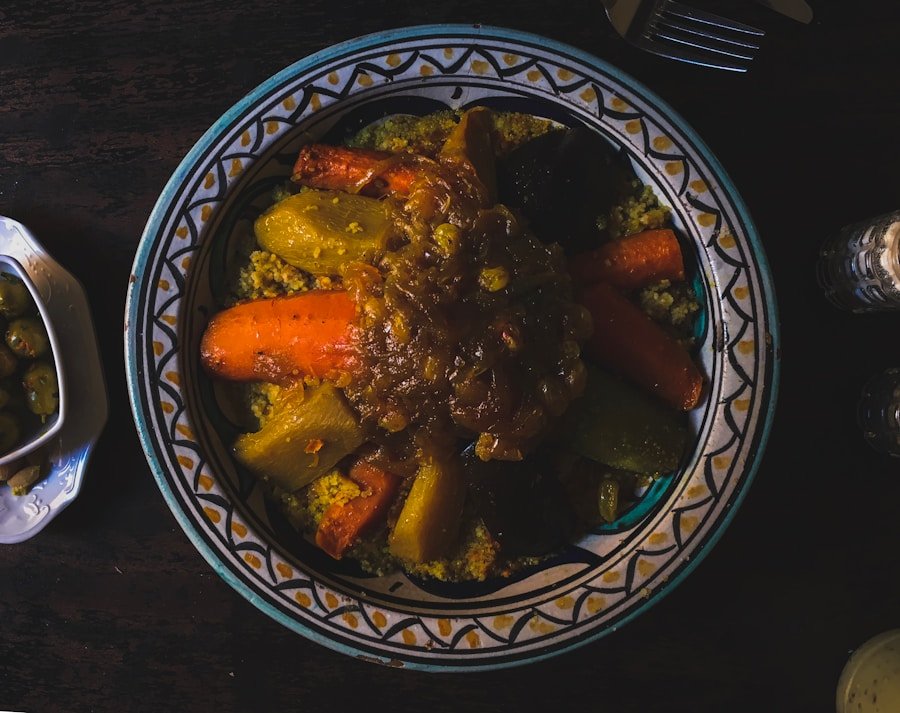
Couscous is a staple food in North African cuisine, particularly in countries such as Morocco, Algeria, Tunisia, and Libya. It is a type of pasta made from semolina, which is the coarse, purified wheat middlings of durum wheat. The word “couscous” itself is derived from the Berber word “k’seksu,” which means well-rounded. This perfectly describes the small, round granules of couscous that are a common sight on North African dinner tables. Couscous is not only a food but also a symbol of hospitality and togetherness in North African culture. It is often served during special occasions and family gatherings, and its preparation and consumption are steeped in tradition and ritual.
Origins and Historical Development of Couscous
The origins of couscous can be traced back to the Berbers, the indigenous people of North Africa. It is believed that couscous has been consumed in the region for centuries, with evidence of its existence dating back to the 7th century. The Berbers were known for their agricultural practices and their use of semolina to make couscous. Over time, couscous became a popular food not only among the Berbers but also among other ethnic groups in North Africa. The historical development of couscous is closely tied to the spread of Islam in the region, as the introduction of couscous to North Africa is believed to have occurred during the Arab conquests. As Islam spread, so did the consumption of couscous, and it eventually became a staple food in the region.
Cultural Significance and Traditions Surrounding Couscous
Couscous holds great cultural significance in North African societies. It is often associated with hospitality, as it is a common practice to serve couscous to guests as a sign of welcome and generosity. In many North African communities, the preparation of couscous is a communal activity that brings people together. Women, in particular, play a central role in the preparation of couscous, and the knowledge and skills associated with making couscous are often passed down from generation to generation. There are also specific traditions and rituals surrounding the consumption of couscous, such as using one’s hands to eat it as a sign of respect and appreciation for the food.
The Role of Couscous in North African Cuisine
Couscous is a versatile ingredient that plays a central role in North African cuisine. It is often served as a base for stews, tagines, and other flavorful dishes. The light and fluffy texture of couscous makes it an ideal accompaniment to rich and hearty meat or vegetable-based dishes. In addition to being a main course, couscous is also used in salads and desserts in North African cuisine. Its neutral flavor allows it to be paired with a wide variety of ingredients, making it a versatile and essential component of many traditional dishes.
Variations and Regional Differences in Couscous Preparation
While couscous is a common food across North Africa, there are variations in its preparation and serving across different regions. In Morocco, for example, couscous is often steamed in a special pot called a couscoussier and served with a rich stew made with meat, vegetables, and spices. In Tunisia, couscous is typically served with fish or seafood, reflecting the country’s coastal location. Algerian couscous tends to be spicier than its Moroccan and Tunisian counterparts, with the addition of harissa, a hot chili pepper paste. Each region has its own unique take on couscous, reflecting the diverse culinary traditions and influences present in North African cuisine.
Couscous in Modern Times: Global Influence and Adaptations
In recent years, couscous has gained popularity beyond North Africa and has become a global culinary phenomenon. It is now widely available in supermarkets and restaurants around the world, and its versatility has made it a favorite ingredient for chefs and home cooks alike. In addition to its traditional uses, couscous has been adapted to fit into various international cuisines, such as salads, soups, and even desserts. Its quick cooking time and ability to absorb flavors make it an attractive option for busy individuals looking for a convenient yet nutritious meal.
Preserving and Promoting Couscous as a Cultural Heritage
As couscous continues to gain popularity worldwide, efforts are being made to preserve and promote it as a cultural heritage. Organizations such as UNESCO have recognized the cultural significance of couscous and have designated it as an intangible cultural heritage of humanity. This recognition has helped raise awareness about the importance of preserving traditional couscous-making techniques and promoting sustainable practices in its production. Additionally, initiatives aimed at educating people about the history and cultural significance of couscous are helping to ensure that this beloved food remains an integral part of North African identity for generations to come. By celebrating couscous as more than just a food but as a symbol of community, tradition, and hospitality, its cultural significance can be preserved and appreciated by people around the world.